Are Loft Conversions Popular in North West London?
December 15, 2025
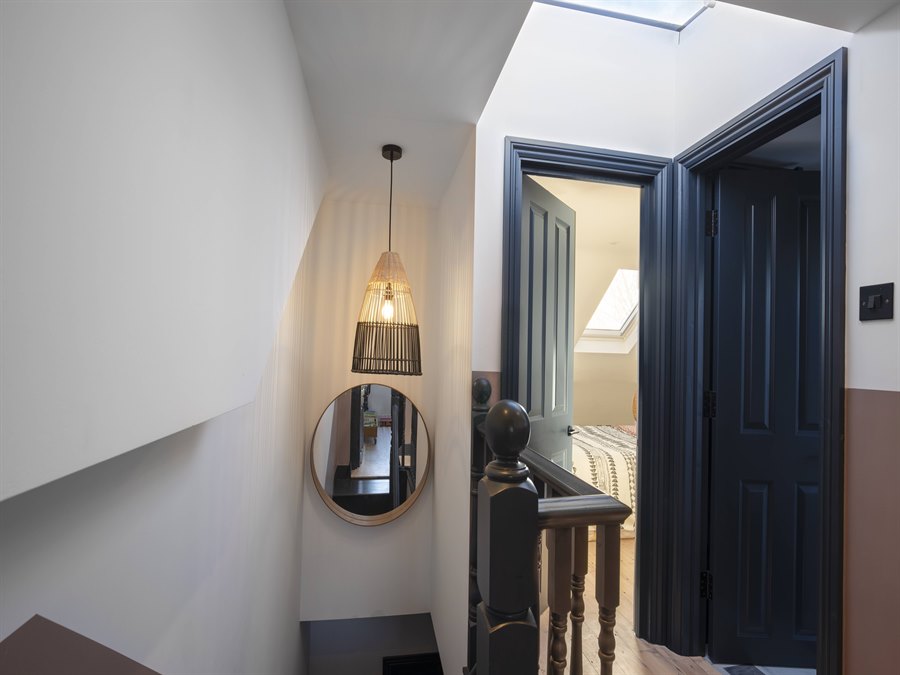
North West London is one of the most active areas in the capital for loft conversions, and it is easy to see why. The housing stock across areas like Barnet, Brent, Harrow, Camden, and parts of Ealing is dominated by exactly the type of properties that convert well. Semi-detached and detached homes from the 1930s, large Victorian and Edwardian terraces, and substantial Edwardian semis all lend themselves naturally to loft conversions that add genuine space and meaningful value.
Add to that the property values across North West London, which make the return on investment from a well-executed conversion particularly strong, and you have a combination of factors that make this one of the busiest areas in London for this type of work.
The housing stock that makes North West London ideal
The reason loft conversions are so popular in North West London comes down to the specific type of homes that dominate the area.
The interwar suburban expansion of the 1920s and 1930s produced large numbers of semi-detached homes across Barnet, Harrow, Brent, and the outer parts of Camden. These homes typically have hipped roofs, generous ridge heights, and loft spaces that respond extremely well to hip to gable conversions combined with rear dormers. The result is often a substantial master bedroom suite that transforms how the property functions for a growing family.
Victorian and Edwardian terraces are concentrated in the inner parts of North West London, particularly across Camden, parts of Brent, and the conservation areas of Barnet. These properties, with their steep-pitched gable-ended roofs, are natural candidates for rear dormers and L-shaped conversions. Many have back additions that create the specific geometry that makes an L-shaped conversion possible, delivering the largest possible loft floor area within the existing roof footprint.
Detached homes, which are more common in North West London than in most other parts of the capital, offer the most flexibility of all. Detached properties can accommodate hip to gable conversions on both end elevations, full-width rear dormers, and, in some cases, combinations of conversion types that create genuinely large additional floor areas.
Property values and return on investment
Property values across North West London make the financial case for loft conversions particularly compelling.
In areas like Hampstead, Highgate, and the more sought-after parts of Barnet, average property values are well above the London median. A well-executed loft conversion adding a master bedroom and ensuite can add between 20% and 25% to a property's value in these locations. On a home worth £900,000, that is £180,000 to £225,000 in added value for a conversion that costs between £55,000 and £80,000 to build.
Even in more moderately priced parts of North West London, such as Harrow, Wembley, and outer Brent, the value uplift from a quality loft conversion consistently outperforms the build cost. The demand for family homes with four or more bedrooms in good school catchment areas is strong and persistent, and buyers pay a premium for the extra bedroom and bathroom that a loft conversion provides.
Our loft conversion vs moving house guide runs through the full financial comparison between converting and moving to a bigger property, which is particularly relevant in North West London where the stamp duty and transaction costs of upsizing are substantial.
Planning rules across North West London boroughs
North West London spans several boroughs, and the planning rules that affect loft conversions vary between them. Understanding the specific rules for your borough before you start planning is important.
The London Borough of Barnet covers a large area of North West London including East Barnet, Finchley, Golders Green, Hendon, and Mill Hill. Most residential properties in Barnet sit outside conservation areas and benefit from standard national permitted development rights. A rear dormer on a standard terrace or semi-detached home in most parts of Barnet will qualify for permitted development provided it meets the volume and height limits. Barnet does have conservation areas, particularly around the historic centres of East Barnet and Hadley, where stricter rules apply.
The London Borough of Brent includes Wembley, Kilburn, Willesden, and Cricklewood. Brent has a number of conservation areas, particularly in the south of the borough, closer to the boundary with Camden, and Article 4 directions that restrict permitted development in certain streets. Checking your specific address on Brent Council's planning portal before assuming permitted development applies is always worth doing.
The London Borough of Harrow covers Harrow on the Hill, Pinner, Stanmore, and Wealdstone among others. Harrow has relatively fewer conservation area restrictions than inner London boroughs, and most standard loft conversions on the dominant 1930s semi-detached stock proceed under permitted development. Harrow on the Hill village is a notable exception with stricter conservation controls.
The London Borough of Camden covers the inner parts of North West London including Hampstead, Belsize Park, Chalk Farm, and Kentish Town. Camden is one of the most restrictive London boroughs for planning purposes. It has extensive conservation area coverage and Article 4 directions across large parts of the borough. Loft conversions in Camden frequently require full planning permission rather than permitted development, and the council's conservation officers apply the rules rigorously. Engaging with Camden's planning department early and getting professional design advice is particularly important in this borough.
Camden Council's planning portal provides detailed information about conservation areas, Article 4 directions, and local planning policies relevant to loft conversions.
Our permitted development rules guide explains the national framework that applies across all boroughs, and our conservation area guide covers the additional restrictions that apply in sensitive locations like much of Camden.
The most popular conversion types in North West London
The dominant housing type in each part of North West London shapes which conversion types are most commonly built.
Hip to gable conversions combined with rear dormers are the most popular choice across the 1930s semi detached stock that dominates Barnet, Harrow, and Brent. These properties have hip roofs, making a hip-to-gable conversion the most space-efficient option, and the combination with a rear dormer creates a substantially larger and more valuable loft than a dormer alone.
Our hip-to-gable loft conversion guide covers this conversion type in detail, including costs, planning considerations, and the structural work involved.
Rear dormers and L-shaped conversions are the most common choice on the Victorian and Edwardian terraces of inner North West London. These properties have gable-ended roofs that do not benefit from a hip to gable conversion, but their steep pitch and often generous ridge height make them excellent candidates for rear dormers and L-shaped conversions that create large, well-lit loft rooms.
Our L-shaped loft conversion guide explains why this conversion type works so well on Victorian and Edwardian terraces and what it involves in terms of cost, structure, and planning.
Velux conversions are popular across North West London where budget is the primary consideration or where the existing loft already has excellent natural height. Many 1930s semis in Barnet and Harrow have ridge heights that make a Velux conversion a genuinely viable option, particularly for a study or single bedroom rather than a master suite.
Our Velux loft conversion guide covers when this type works well and when a dormer is the better investment.
Conservation areas and listed buildings in North West London
North West London has a varied landscape of conservation areas. Camden's extensive designations are well known and significantly affect what is permissible on residential properties across much of the inner borough. But other North West London boroughs also have conservation areas that are worth being aware of.
Hampstead Garden Suburb, which straddles the boundary between Barnet and Camden, is one of the most strictly controlled residential areas in London. It is a designated conservation area with specific design guidance, and the Hampstead Garden Suburb Trust has additional oversight powers over external alterations. Loft conversions in Hampstead Garden Suburb require full planning permission, sympathetic design, and careful engagement with both the local authority and the Trust before any work proceeds.
Hampstead Garden Suburb Trust publishes detailed guidance on acceptable roof alterations and extensions, essential reading before pursuing a loft conversion in this area.
Pinner village in Harrow, Stanmore town centre, and parts of Finchley in Barnet all have conservation area designations that restrict what permitted development allows. Golders Green and parts of Hendon have specific streetscape characteristics that local policy seeks to protect.
If your property is listed, which a small but significant number of North West London homes are, the rules are more demanding still. Listed building consent is required for any structural alterations, regardless of whether planning permission is needed, and the design must preserve the special character of the building.
Historic England's National Heritage List allows you to check whether your property is listed before you proceed with any plans.
The loft conversion process in North West London
The process for a loft conversion in North West London follows the same stages as anywhere else in London, but the specific timeline and requirements vary depending on which borough you are in and whether planning permission is needed.
For a standard permitted development conversion in Barnet or Harrow, the overall timeline from appointing a designer to moving into the finished room is typically five to seven months. For a conversion requiring full planning permission in Camden or a conservation area application elsewhere in the borough, seven to ten months is more realistic.
Building regulations apply to every conversion regardless of borough or planning status. Party wall notices are required wherever work affects or is close to a shared wall. The structural engineer assessment and calculations are a fundamental part of every project.
Our how long does a loft conversion take guide covers the realistic timeline for each stage of the process in detail.
Finding the right contractor in North West London
North West London is well served by loft conversion specialists, but the variation in quality and experience between contractors is significant. Choosing the right contractor matters enormously and the guidance that applies across London applies here equally.
Get three properly itemised quotes. Check insurance and accreditation. Ask for references from completed projects in the area and follow them up. Look for a contractor who has specific experience with your conversion type and your borough's planning requirements.
The Federation of Master Builders member search allows you to find vetted contractors in specific areas of London. The TrustMark scheme provides another route to finding government endorsed tradespeople who have met quality and trading standards.
Our most common loft conversion mistakes guide covers the contractor selection errors that most frequently cause problems on loft conversion projects and what to look for when evaluating quotes and contractors.
What North West London homeowners typically achieve
The results achievable through a well-executed loft conversion in North West London are genuinely impressive, given the housing stock available.
A 1930s semi-detached home in Barnet or Harrow that starts with a hipped loft and limited usable space can typically gain a 30 to 45 square metre master bedroom suite through a hip-to-gable with a rear dormer conversion. A Victorian terrace in inner North West London can gain a similarly generous L-shaped loft room. And even a more modest Velux conversion on a property with good natural ridge height creates a useful additional room at a cost hard to match with any other type of home improvement.
The combination of North West London property values, the suitability of the dominant housing types for conversion, and the strong demand from buyers for homes with extra bedrooms makes loft conversions one of the most financially rational home improvements available to homeowners in this part of London.
The straightforward summary
Loft conversions are popular in North West London because the housing stock is well-suited, the property values make the return on investment compelling, and the demand for larger family homes in the area is consistently strong.
The specific rules, costs, and conversion types that make sense depend on your borough, your property type, and what you are trying to achieve. Getting these factors right requires local knowledge and professional input from the design stage.
At Loft Converter London, we work extensively across North West London and understand the specific characteristics of the housing stock, the planning requirements of each borough, and the design approaches that work best for the properties in this part of the capital. If you are considering a loft conversion in North West London and want to understand what is possible for your home, we would be happy to start that conversation.
Our loft conversion costs page, loft conversion types guide, and building regulations guide are useful starting points as you continue to build your understanding before speaking to anyone.