How to Design the Perfect Loft Bedroom
August 17, 2025
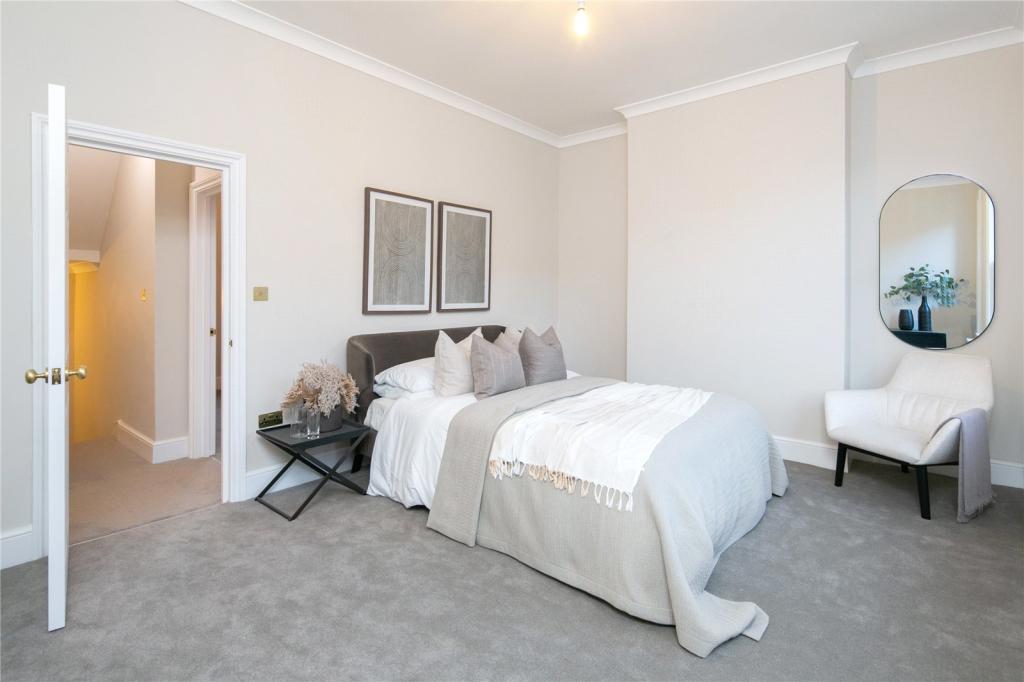
A loft bedroom is one of the most rewarding spaces to design in a London home. It sits apart from the rest of the house, often has interesting angles and roof lines, and with the right approach can feel genuinely special rather than just functional.
But loft bedrooms also come with specific design challenges that standard bedrooms do not. Low eaves, sloping ceilings, awkward corners, and limited wall space all need to be worked through carefully. Get the design right from the start and the room becomes the best in the house. Get it wrong and it feels cramped, poorly lit, and frustrating to live in.
Here is a practical guide to designing a loft bedroom that genuinely works.
Start with the layout before anything else
The single most important design decision in a loft bedroom is where the bed goes. Everything else follows from that.
The bed needs a position where the ceiling height above it is adequate. Lying in bed and feeling the ceiling too close overhead is uncomfortable and claustrophobic. Ideally the ceiling above the bed should be at least 1.8 metres, and higher is better. In a dormer conversion the central section of the room has full height throughout, which is usually where the bed sits naturally.
Once the bed position is fixed, work outward from there. Where can storage go without eating into the circulation space? Where does natural light fall in the morning and evening? Where is the door arriving from the staircase, and does it create a sensible flow into the room?
Sketch the layout on paper before committing to any built-in furniture or storage. A simple floor plan to scale will reveal quickly whether a proposed layout works or creates problems. If you are working with an architect or architectural technician this is a conversation to have at the design stage before the conversion is built, not after. Our do you need an architect guide explains how design professionals can add value at this stage and what to expect from the process.
Make the most of the sloping ceiling
Sloping ceilings are the defining characteristic of most loft bedrooms and they are an asset, not just a constraint. The trick is working with them rather than fighting them.
Low eaves areas, where the ceiling slopes down toward the edges of the room, are unsuitable for standing but perfectly suited for storage, seating, or a desk. Built-in wardrobes that follow the roofline are one of the most practical and visually satisfying solutions in a loft bedroom. They use space that would otherwise be wasted and create a clean, integrated look that works better than freestanding furniture pushed awkwardly against a sloping wall.
A window seat or reading nook built into a low eaves area is another popular approach that turns an architectural constraint into a feature. Low platforms with cushions and built-in shelving on either side create a cosy, purposeful space from what might otherwise be a dead corner.
The RIBA Find an Architect tool is useful if you want to find a designer with specific experience in residential loft spaces who can help you develop these ideas properly for your specific room.
Natural light is everything
A loft bedroom lives or dies by its natural light. Get it right and the room feels bright, airy, and connected to the outside. Get it wrong and it feels dark and oppressive regardless of how well it is decorated.
Dormer windows that face the garden provide excellent forward-facing light that feels natural and comfortable. Roof lights set into the slope complement this with overhead light that changes beautifully through the day and brings in sky views that no vertical window can match.
For bedrooms, the position of roof lights relative to the bed matters. A roof light directly over the bed lets in early morning sun, which wakes sleepers naturally but may not be welcome in summer. Positioning roof lights to one side of the bed, or specifying blackout blinds from the outset, gives you control over light levels without sacrificing the benefit of the window.
Velux offers a well organised range of roof window options including blackout, dim-out, and solar control blinds that are worth looking at during the specification stage. Their room visualiser tool also lets you explore how different window configurations affect the feel of the space before anything is built.
On north facing slopes where direct sunlight is limited, roof lights can still bring in good diffused daylight. South and west facing slopes get strong direct sun and solar control glazing is worth specifying to prevent the room from overheating in summer.
Storage: plan it in, do not add it later
Storage in a loft bedroom needs to be designed in from the start. The irregular geometry of the space makes freestanding furniture a poor fit in most cases, and trying to retrofit storage into a finished loft bedroom is expensive and often disappointing.
Built-in wardrobes that follow the eaves line are the most space efficient solution. They can be designed to use every centimetre of height up to the point where the slope meets the floor, with hanging rails, shelving, and drawers configured to the specific dimensions of the eaves cavity.
A well designed built-in wardrobe in a loft bedroom will typically store as much as a conventional wardrobe in a standard bedroom while occupying space that could not be used for anything else. This is one of the genuinely clever aspects of loft bedroom design when it is done properly.
For a master bedroom with generous floor area, a dedicated dressing area in one of the eaves sections is worth considering. This separates the sleeping and dressing functions cleanly and creates a room that feels more considered and more luxurious than a standard bedroom with a wardrobe against the wall.
Neville Johnson and Hammonds Furniture both specialise in fitted bedroom furniture and have specific experience designing storage solutions for loft conversions with sloping ceilings and irregular shapes.
Ensuite design in a loft bedroom
Most people converting their loft into a master bedroom want an ensuite. Getting this right requires careful thought about position, layout, and the practical requirements of fitting a bathroom in a space where headroom varies.
The ensuite needs to be positioned where the ceiling height is sufficient for the specific fittings. A shower needs at least 2 metres of headroom at the shower head position. A toilet and basin need adequate height but are more flexible. The most common approach is to position the ensuite under the lower eaves section where headroom is insufficient for standing, using the space for the toilet and vanity, with the shower positioned where the ceiling is higher.
Ventilation is critical in a loft ensuite. Mechanical extract ventilation ducted to the outside is a building regulations requirement, and in a loft space where the duct run may be longer than in a standard bathroom, specifying an appropriately powerful fan is important. A poorly ventilated loft ensuite creates condensation problems that are expensive to fix after the fact.
Natural light in the ensuite makes a significant difference to how the room feels. A roof light above the shower is one of the most effective and most popular solutions, and Velux and other manufacturers produce roof windows specifically designed for wet room environments. The Velux integra range includes solar and electric opening options that work well in bathroom positions where manual operation is awkward.
Our dormer loft conversion guide covers how ensuites are typically integrated into dormer conversions and what to budget for the bathroom element specifically.
Heating and ventilation
Loft bedrooms can be uncomfortably hot in summer and cold in winter if heating and ventilation are not thought through properly. The thermal performance of the conversion is the foundation, but how the room is heated and ventilated day to day matters just as much.
Most loft conversions in London are heated by extending the existing central heating system with radiators in the loft. This works well for winter warmth but does nothing about summer overheating, which is a real issue on south and west facing loft bedrooms with significant roof light glazing.
Opening roof lights provide natural ventilation and help manage heat buildup on warm days. Positioning at least one opening roof light to allow cross ventilation, where air can enter through one window and exit through another, significantly improves summer comfort.
Electric underfloor heating under a tiled ensuite floor is a popular addition that provides warmth at floor level without requiring additional radiators in a space where wall space for radiators may be limited.
For high specification conversions, a mechanical ventilation with heat recovery system provides continuous background ventilation while recovering heat from outgoing air. It is more expensive to install than a simple radiator and opening windows solution but creates a more comfortable and energy efficient room year round. MVHR units from manufacturers such as Zehnder are worth researching if this level of specification is relevant to your project.
Flooring choices
Flooring in a loft bedroom affects both the feel of the room and the structural requirements of the floor beneath it.
Engineered timber is one of the most popular choices for loft bedrooms. It is warm underfoot, looks good, and is dimensionally stable in the temperature and humidity variations that loft spaces experience. Solid timber is also used but is more susceptible to movement in environments that warm and cool significantly through the day.
Carpet is warmer and quieter than hard flooring but requires careful specification in a space that may experience some degree of temperature cycling. Good quality carpet with a proper underlay performs well in loft bedrooms and is often the preferred choice for comfort.
Tiles are typically reserved for the ensuite rather than the bedroom itself, where the hardness and coldness underfoot work against the comfort expected in a sleeping space.
Whatever flooring is chosen, make sure it is installed after the structural floor has been properly completed and signed off by building control. Fitting flooring over a floor that has not been formally inspected creates problems at the sign off stage. Our building regulations guide explains the inspection process and what happens at each stage of the build.
Colour, light, and the feel of the room
Loft bedrooms benefit from a considered approach to colour that works with the angles and proportions of the space rather than against them.
Light colours open up the room and make sloping ceilings feel less imposing. White or off-white ceilings throughout, including on the sloping sections, create a clean and airy feel that works well in most loft bedrooms. Darker colours on the sloping ceiling sections can create a cocooning effect that feels deliberately intimate, but this works best in rooms with good natural light rather than those that rely entirely on artificial lighting.
Painting the walls and ceiling the same colour throughout, treating the entire irregular envelope as a single surface, is a contemporary approach that flattens the angles and creates a calm, unified feel. It works particularly well in rooms with interesting architectural shapes where contrast between wall and ceiling colour would draw attention to every awkward junction.
Farrow and Ball have a useful room-by-room colour guide that includes specific advice for rooms with sloping ceilings and unusual proportions. Their sample service lets you test colours in the actual space before committing, which is worth doing in a loft where the light quality is different from a standard room.
Lighting design
Artificial lighting in a loft bedroom deserves specific attention because the geometry of the space makes standard ceiling mounted fittings less effective than in a regular room.
A central ceiling rose in the middle of a sloping ceiling provides uneven light distribution and creates shadows in the eaves sections. Recessed downlights positioned along the flat section of the ceiling, combined with wall lights at low level and bedside lighting, provide much better coverage and more flexibility.
Lighting on a dimmer circuit throughout is worth specifying from the start. The ability to adjust light levels from bright and functional for getting dressed to low and relaxed for winding down makes a meaningful difference to how the room feels in daily use.
If the conversion includes a roof light directly above, a shading solution that incorporates electric blackout blinds makes the room functional as a sleeping space year round. Manually operated blinds on a roof light that is not easily reached are frustrating in practice. Specify electric operation from the outset and control them from a bedside switch or a smartphone app.
The straightforward summary
Designing a loft bedroom well comes down to working with the geometry of the space from the start rather than treating it as a standard room with an awkward ceiling. Fix the bed position first, design storage in rather than adding it later, get the natural light right, and think carefully about heating, ventilation, and how the room will actually be used day to day.
The rooms that work best are the ones where these decisions were made at the design stage, before the conversion was built, not retrofitted afterward. An experienced designer who understands loft spaces will help you avoid the most common mistakes and create a room that feels genuinely considered rather than improvised.
At Loft Converter London we think about how each loft bedroom will actually live before we finalise any drawings. The structural decisions and the design decisions are connected, and getting both right at the same time is what creates a conversion that exceeds expectations rather than just meeting the minimum brief.
If you are still at the planning stage, our loft conversion types guide, loft conversion costs page, and do you need an architect guide are useful next steps before you start making detailed design decisions.