What are the Best Loft Conversion Types for 1930s Houses in London?
July 29, 2025
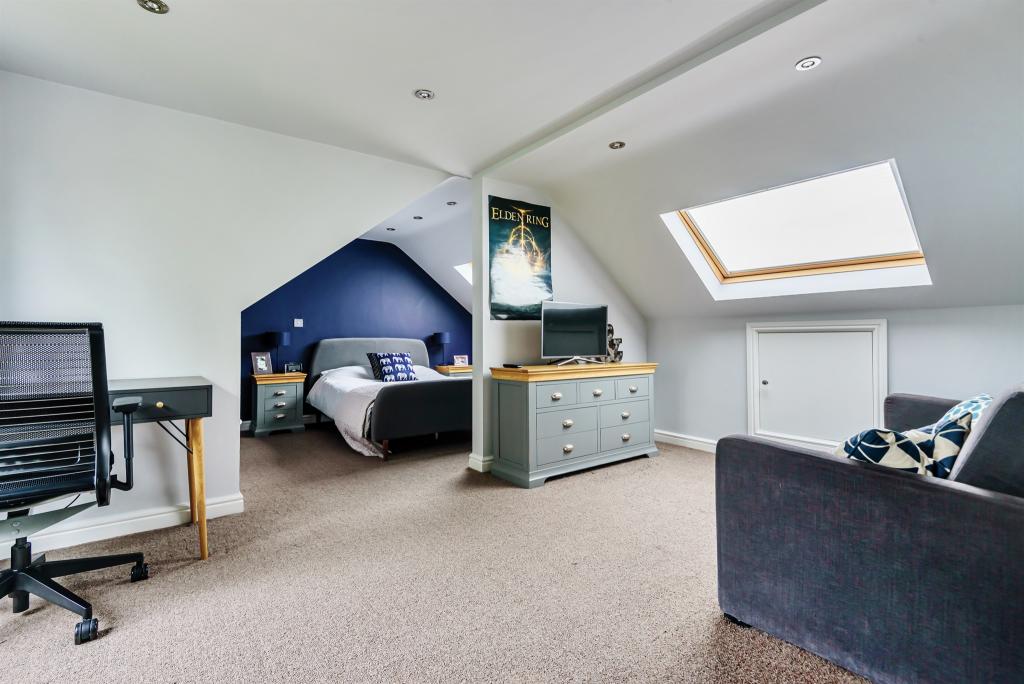
1930s houses make up a significant proportion of London's housing stock, particularly in outer south, east, and west London. They are well-built, generously proportioned by London standards, and, in most cases, have loft spaces that convert extremely well.
But 1930s houses have specific characteristics that affect which conversion types work best, what planning rules apply, and what the structural work involves. Understanding those characteristics before you start planning will help you make better decisions and avoid the surprises that catch people out.
What makes 1930s houses different
Before getting into conversion types, it is worth understanding what sets 1930s houses apart structurally and architecturally.
Most 1930s London homes are semi-detached or detached, built in the interwar suburban expansion that spread out from the inner city along new arterial roads and underground lines. They tend to have hipped roofs rather than the gable-ended roofs common on Victorian and Edwardian terraces. The roof pitch is typically around 40 to 45 degrees, which is steep enough to create a reasonable loft space but often not as generous as the steeper-pitched roofs on older stock.
The back addition that defines the Victorian and Edwardian terraces is largely absent from 1930s homes. Instead, you typically have a more rectangular footprint with a hipped roof on both the main body of the house and sometimes over a rear projection.
The walls are usually cavity construction, which was becoming standard by this period, and the timber frame is generally sound in well-maintained properties.
One characteristic that matters specifically for loft conversions is the presence of a hipped roof on the side or sides of the property. This is what opens up the hip to gable option that is not available on gable-ended Victorian terraces, and it is often the most important single factor in deciding which conversion type makes the most sense.
Hip to gable conversion: the most popular choice
For most semi-detached 1930s houses in London, a hip-to-gable conversion combined with a rear dormer is the strongest option available. It is popular for good reason.
The hipped end of a 1930s semi-detached roof slopes inward from the party wall side, eating into the loft space and creating awkward triangular corners that are largely unusable. A hip-to-gable conversion removes that sloping end and replaces it with a vertical gable wall extending to the ridge, transforming the shape of the loft from an awkward wedge into a proper rectangular room.
Combined with a rear dormer that adds full headroom across the back of the roof, the result is a loft room that is genuinely generous, well-proportioned, and large enough to accommodate a master bedroom with an ensuite comfortably.
The combined hip to gable and rear dormer is the single most transformative conversion available to 1930s semi-detached homes. It creates the largest possible usable floor area within the existing roof footprint and consistently delivers the strongest return on investment of any option available to these properties.
Our hip to gable loft conversion guide covers the specific costs, structural requirements, and planning considerations for this conversion type in detail. Our hip to gable vs dormer guide compares the two approaches directly, if you want to understand the trade-offs before deciding.
Rear dormer only: the more affordable alternative
Not every homeowner wants or needs the full hip-to-gable treatment, and a rear dormer alone is a perfectly viable option on many 1930s houses.
If the existing loft already has a reasonable ridge height and the triangular corners created by the hipped end are not a critical issue for the intended use of the room, a rear dormer alone can create a usable bedroom or study without the additional cost and complexity of the hip-to-gable element.
The rear dormer provides full headroom across the back portion of the loft and delivers the natural light and ventilation a habitable room requires. In a 1930s semi-detached home with a reasonably steep roof pitch, the floor area within the dormer alone is often sufficient for a single bedroom with a modest ensuite.
The decision between a rear dormer alone and a hip-to-gable combined with a rear dormer comes down to three questions. How much usable space do you actually need? What is your budget? And how important is maximising the value added to the property?
If the answers point toward more space, a higher budget, and the strongest return, go for the combined approach. If a single room is sufficient and budget is the primary constraint, a rear dormer alone delivers good value on a 1930s house.
Our dormer loft conversion guide covers costs, planning, and structural requirements for rear dormers in detail.
Velux conversion: when it works on a 1930s house
A Velux conversion keeps the existing roofline intact and adds roof windows flush with the slope. It is the most affordable conversion type and the least disruptive to build.
For a 1930s house, a Velux conversion can work well, but only if the existing ridge height is sufficient. The 40 to 45 degree pitch common on 1930s homes creates a reasonable loft space in many properties, but the ridge height is often lower than on the steeper-pitched Victorian and Edwardian terraces.
Before committing to a Velux conversion on a 1930s house, measure the ridge height carefully. If the internal height from the strengthened floor level to the underside of the ridge is at least 2.2 metres, a Velux conversion will create a usable room. If it is below that, the space will feel cramped, and a dormer is a better investment even at a higher cost.
The other consideration specific to 1930s houses is that the hipped ends of the roof mean the Velux conversion creates a room that narrows toward each end. Even if the central ridge height is adequate, the usable floor area may be more limited than it appears from the outside because the sloping hip ends cut into the space on both sides.
A Velux conversion on a 1930s semi-detached home often works best as a study or single bedroom rather than a master bedroom suite, simply because the irregular shape of the room makes it harder to fit larger furniture and a bathroom in the space available.
Our Velux loft conversion guide explains in detail when this conversion type works well and when it is likely to disappoint, which is worth reading before ruling out or committing to this option.
What about mansard conversions?
A mansard conversion involves rebuilding the entire rear roof slope as a near-vertical wall with a shallow-pitched roof at the top. It creates the maximum possible internal volume of any conversion type and is commonly seen on inner London period properties.
On a 1930s house, a mansard is technically possible, but rarely the most practical or cost-effective choice. Mansard conversions are significantly more expensive than dormers or hip-to-gable conversions, typically starting at £60,000 and often exceeding £80,000 fully finished. They almost always require full planning permission regardless of location. And the architectural character of a mansard sits more naturally with the Victorian and Edwardian terraces of inner London than with the suburban semi-detached aesthetic of most 1930s housing.
For a 1930s house where the goal is maximising space and value, a hip-to-gable with a rear dormer almost always delivers a better outcome at a lower cost than a mansard. Mansard conversions make more sense on inner London terraces where a hip to gable option is not available and the scale of the building suits the more dramatic roof alteration.
Planning permission on 1930s houses
Most 1930s houses in London are outside conservation areas, so standard national permitted development rules apply without the additional restrictions that affect older inner London stock.
A rear dormer on a 1930s semi-detached home typically qualifies for permitted development provided it meets the volume limit of 50 cubic metres for a detached or semi-detached property and does not exceed the ridge height or project beyond the outer wall.
Hip-to-gable conversions on 1930s homes are where the planning position becomes less predictable. Some London boroughs accept hip to gable conversions as permitted development on semi-detached homes. Others require a full planning application because the alteration is visible from the street or highway.
This variation between boroughs means you cannot assume either way without checking. Your local planning authority's portal will show whether permitted development applies and whether any Article 4 directions affect your street. A quick pre-application enquiry with the planning department is worth the modest cost if there is any doubt.
Our permitted development rules guide explains the framework in detail. Our planning permission timeline guide outlines what the application process entails if one is required.
Structural considerations specific to 1930s houses
The structural characteristics of 1930s houses create specific considerations for loft conversions that are worth understanding before you appoint an engineer or start getting builder quotes.
The existing floor joists in the loft are almost certainly not adequate for a habitable room. This is true of virtually all pre-1980s London homes, regardless of construction type. New joists will need to be installed alongside the existing structure to bring the floor up to building regulations standard for a habitable room.
The roof timbers in many 1930s homes are in reasonable condition, provided the roof has been maintained, but some properties of this age have timbers affected by moisture over the decades. A structural engineer will assess the condition of existing timbers during their initial visit and identify any that require remedial treatment before the conversion proceeds.
Steel beams are almost always required on a hip to gable conversion to carry the extended ridge and transfer loads to the new gable wall and the structure below. On a rear dormer, they are commonly required around the dormer opening. The engineer will specify the size and position of each beam based on the calculated loads specific to your building.
Access for steelwork installation in a 1930s semi-detached home is sometimes more challenging than in a terrace because the side access that exists in a terrace is often absent. Craneage or other lifting solutions may be required to get large beams into position, which adds to both cost and programme. An experienced builder will factor this in from the start rather than discovering it on site.
Our structural calculations guide explains what the structural engineer assesses and why involving them before drawings are finalised saves time and money across the whole project.
Party wall considerations on semi detached 1930s homes
On a semi-detached 1930s house, the party wall sits on one side only. Any work that affects or is close to that shared wall requires party wall notices to be served on the neighbour before work starts.
A rear dormer that sits away from the party wall may not trigger party wall obligations, depending on how close it gets to the boundary. A hip to gable conversion that involves structural work on or near the party wall almost certainly will.
The hip end of a semi-detached 1930s roof does not directly involve the party wall in the same way as on a terrace, but the structural reorganisation required to build the new gable wall and extend the ridge can still bring work close enough to the shared wall to trigger the Act.
Your structural engineer's drawings will show clearly whether party wall notices are required. Serve them early. On a semi-detached home with one neighbour, the process is simpler than on a mid-terrace, but the same basic rules and timelines apply.
Our party wall agreements guide explains the full process including what happens if your neighbour dissents and what the surveyor fees are likely to be.
What a 1930s loft conversion typically costs
The cost depends significantly on which conversion type you choose.
A Velux conversion on a 1930s house typically costs between £20,000 and £35,000 fully finished. A rear dormer alone typically costs between £35,000 and £55,000. A hip to gable with a rear dormer typically costs between £55,000 and £80,000 fully finished.
These figures include the structural work, staircase, insulation, windows, plastering, electrics, and basic decoration. What they do not include are the additional professional fees and costs that sit alongside any loft conversion project.
Our loft conversion budgeting guide covers everything from structural engineer fees and building control to party wall costs and contingency allowances, giving you a realistic total budget to work with before you start approaching builders.
How much value does a loft conversion add to a 1930s house?
1930s semi-detached homes in London respond well to loft conversions in terms of value. Buyers in the areas where these homes are most common, outer south London, east London, and suburbs served by the underground network, actively look for the extra bedroom and bathroom that a loft conversion provides.
A rear dormer creating a bedroom and ensuite typically adds between 15% and 20% to the value of a 1930s semi-detached home. A hip-to-gable with a rear dormer typically adds between 20% and 25%, reflecting the larger, more generous space it creates.
On a 1930s semi detached home worth £550,000, that is between £82,500 and £137,500 in added value depending on the conversion type. Even at the upper end of build costs, the return is strong.
The condition and quality of the finish matter. A well-designed, properly finished conversion with good natural light, a functional ensuite, and adequate storage will always outperform a basic conversion with the same floor area. At Loft Converter London, we work with every client to ensure the design and specification match the intended use and the value outcome they are seeking.
The straightforward summary
For most 1930s semi detached houses in London, a hip to gable conversion combined with a rear dormer is the best option available. It creates the largest usable space, delivers the strongest return on investment, and transforms the roof from an awkward hipped structure into a proper, generous loft room.
A rear dormer alone is a good alternative where budget is the primary constraint or where a single room is sufficient for the intended use. A Velux conversion works on 1930s homes with adequate ridge height but is limited by the irregular shape that the hipped roof creates inside the loft.
The starting point for any 1930s loft conversion is a structural engineer's assessment of the existing roof space to confirm ridge height, floor structure, and timber condition before you commit to any design direction or builder quotes.
At Loft Converter London, we have extensive experience converting 1930s homes across London and understand the specific structural, planning, and design considerations that these properties present. If you are thinking about converting your 1930s loft and want to understand what is possible for your specific home, we are happy to start that conversation.
Our loft conversion costs page, hip to gable vs dormer guide, and permitted development rules guide are useful next steps as you continue to build your understanding.