Hip to Gable vs Dormer Loft Conversion: Key Differences
April 13, 2025
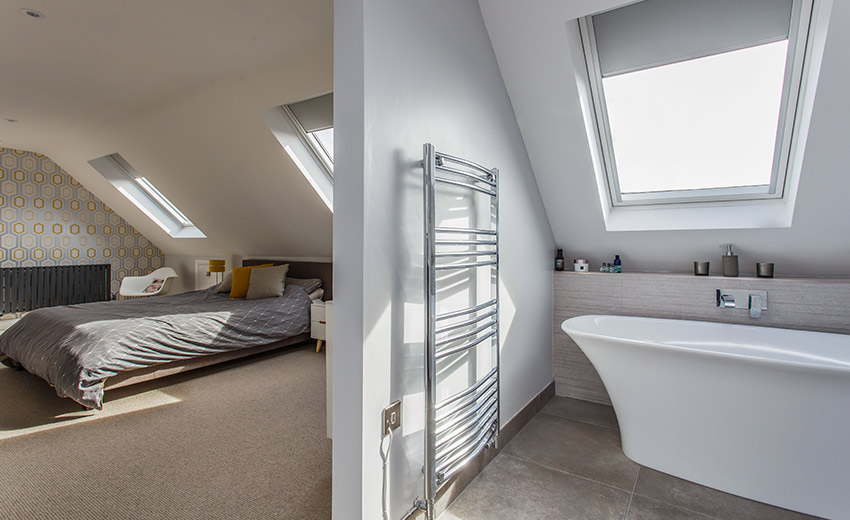
If you are trying to decide between a hip to gable conversion and a dormer, you are probably at the stage where you have done enough research to know both options exist but are not yet clear on which makes more sense for your home.
The two are often discussed together because they are frequently combined on the same project. But they are fundamentally different in what they do, what they cost, and which homes they suit. Understanding the differences clearly will help you make a better decision.
What each one actually does
A dormer conversion extends outward from the existing roof slope, creating a vertical wall and a flat or shallow pitched roof section that projects beyond the original roofline. It adds headroom and usable floor space within the footprint of the existing roof. Most rear dormers in London are built at the back of the property where they are not visible from the street.
A hip to gable conversion does something structurally different. Instead of projecting outward from the slope, it replaces the sloping hip end of the roof with a new vertical gable wall built out to the ridge line. This extends the ridge and creates a much wider, squarer loft space than existed before.
A hip to gable conversion does not add space in the same way a dormer does. What it does is unlock space that the hip end of the roof was previously eating into. The awkward, unusable triangular corners that a hipped roof creates inside the loft are eliminated, and the room becomes a proper rectangular space from wall to wall.
Which homes each option suits
This is the most important practical distinction between the two.
A dormer can be added to almost any roof type, including hipped roofs, gable ended roofs, and most other configurations. It is the most versatile conversion option and suits the widest range of London home types. Terraced houses, semi detached homes, and detached properties can all benefit from a rear dormer.
A hip to gable conversion only applies to homes with a hipped roof. If your roof already has a gable end, a hip to gable conversion is simply not relevant. The question only arises when the end of your roof slopes inward rather than ending in a vertical wall.
In London, hipped roofs are most common on detached and semi detached homes, particularly those built between the 1920s and 1960s. Victorian and Edwardian terraces usually have gable ended roofs and therefore do not need or benefit from a hip to gable conversion.
If you are not sure what type of roof you have, standing back and looking at the end of your house from the street or garden will tell you. A sloping end is a hip. A flat vertical end wall is a gable.
The space each one creates
This is where the numbers start to matter.
A rear dormer on a standard London terrace typically adds between 15 and 25 square metres of usable floor space, depending on the width of the house and the size of the dormer. The headroom within the dormer itself is full height throughout, which makes it straightforward to fit a bedroom, an ensuite, or a study.
A hip to gable conversion on its own does not add a fixed amount of space in the same measurable way. What it does is transform the shape of the existing loft from an awkward wedge to a proper rectangular room. The gain in usable space depends on how steeply the hip slopes and how much of the loft it was previously eating into. For a typical semi detached home the space gained by converting the hip end can be substantial, sometimes adding the equivalent of several square metres of properly usable floor area.
The reason most people combine the two on the same project is that a hip to gable conversion alone, without a rear dormer, often still lacks headroom over much of the floor area. Adding a rear dormer at the same time resolves this and together the two create a genuinely large, well proportioned loft room.
Our hip to gable loft conversion guide covers the specific space gains in more detail and explains how the combination with a rear dormer works in practice.
Cost comparison
A rear dormer on a standard London terrace typically costs between £35,000 and £60,000 fully finished. The range reflects differences in size, specification, and the complexity of the structural work involved.
A hip to gable conversion costs between £40,000 and £65,000 on its own. When combined with a rear dormer, which is the most common approach on semi detached homes, the combined cost typically sits between £55,000 and £80,000 fully finished.
The higher cost of a hip to gable conversion compared to a standard dormer reflects the greater structural complexity. You are removing part of the existing roof, building a new gable wall, extending the ridge, and re-covering the roof over the new structure. Each of those elements adds material and labour cost over and above what a dormer alone requires.
Our loft conversion budgeting guide covers the full cost picture for both types including the additional professional fees, party wall costs, and building control fees that sit alongside the build quote.
Planning permission considerations
Rear dormers on most London homes qualify for permitted development, meaning no planning application is needed provided the design stays within the defined volume and height limits and the property is not in a conservation area or subject to other restrictions.
Hip to gable conversions have a more complicated relationship with permitted development. In many London boroughs a hip to gable conversion falls outside permitted development because it alters the external appearance of a visible roof end. Some boroughs accept them as permitted development. Others require a full planning application.
This variation between boroughs makes it particularly important to check with your local planning authority before proceeding. Do not assume permitted development applies to a hip to gable conversion without confirming it for your specific property and borough.
If planning permission is required it adds cost and time to the programme. A householder planning application costs £258 in England and takes eight to twelve weeks to decide, with professional drawing and consultant costs typically adding £800 to £1,500 on top of that.
Our permitted development rules guide explains the framework in detail and our planning permission timeline guide walks through what the application process involves and how long each stage realistically takes.
Structural complexity
Both conversion types involve structural work, but the nature of that work differs.
A rear dormer requires the existing roof slope to be cut into and a new structural frame built for the dormer itself. Steel beams are commonly required to carry the loads around the dormer opening and transfer them to the walls below. The floor may also need strengthening to meet building regulations requirements for a habitable room.
A hip to gable conversion involves removing the hip rafter and the hip end of the roof structure entirely and replacing it with a new gable wall built out to the ridge. The ridge itself is extended. New roof timbers are required to span the enlarged roof area. Steel beams are almost always needed to carry the extended ridge and transfer loads to the new gable wall and the structure below.
In structural terms a hip to gable conversion is generally the more complex of the two. It involves more disruption to the existing roof structure and requires more careful engineering to ensure the loads are carried correctly through the new configuration.
Our structural calculations guide explains what the structural engineer assesses on each type of conversion and why getting the structural design right before work starts is fundamental to a safe and compliant build.
Disruption and build programme
A standard rear dormer on a London terrace typically takes eight to fourteen weeks from start to completion. During the structural phase, when the roof is being opened up and the dormer frame is being built, there will be several days where the roof is partially exposed. Good builders manage this carefully and have the structure weathertight as quickly as possible.
A hip to gable conversion takes slightly longer because the structural work is more extensive. A hip to gable with rear dormer combined typically runs between twelve and eighteen weeks depending on the size and complexity of the project.
Both types of conversion can be carried out while the family continues to live in the property. The noise and dust during the structural phase is significant but manageable for most households.
Value added to the property
Both types of conversion add meaningful value to London properties, but the combined hip to gable and rear dormer consistently delivers the strongest return.
A rear dormer that creates a bedroom and ensuite typically adds between 15% and 20% to a property's value in London. On a £650,000 home that is £97,000 to £130,000 in added value.
A hip to gable with rear dormer, which creates a larger and better proportioned space, typically adds between 20% and 25%. On the same £650,000 home that is £130,000 to £162,000 in added value.
The stronger return reflects the greater usable space created and the appeal to buyers of a large, well proportioned loft room with proper headroom throughout. In London where space commands a premium, the difference in floor area between a standard dormer and a hip to gable dormer combination translates directly into value.
Our loft conversion vs moving house guide puts these numbers in the context of the full financial comparison between converting and moving to a bigger property.
Which one is right for your home
The answer depends on what type of roof you have and what you are trying to achieve.
If you have a gable ended roof, the hip to gable question does not apply. A rear dormer or an L-shaped dormer is almost certainly the right route and the decision comes down to size, specification, and budget.
If you have a hipped roof and you want to maximise the space and value you create, a hip to gable conversion combined with a rear dormer is the strongest option financially and practically. The additional cost over a dormer alone is usually justified by the additional space and value created.
If you have a hipped roof but budget is the primary constraint, a rear dormer alone can still create a usable room in many cases, particularly if the existing ridge height is reasonable. A structural engineer can assess whether the existing loft space has enough natural height to make a dormer alone work without the hip to gable element.
The most reliable way to understand which approach suits your specific home is to have a structural engineer assess the existing roof space before you commit to any design direction. It costs a few hundred pounds and gives you an accurate picture of what is actually possible before you spend money on drawings or builder quotes.
The straightforward summary
A dormer adds space by projecting outward from the roof slope. A hip to gable conversion adds space by replacing the sloping hip end with a vertical gable wall. Most homes with hipped roofs benefit from both at the same time.
The dormer is the more versatile option and suits a wider range of homes. The hip to gable conversion is only relevant for hipped roof properties but when combined with a dormer creates the largest and most valuable loft conversions available to London homeowners.
At Loft Converter London we assess every project individually to recommend the approach that makes the most sense for the specific home, the budget, and what the homeowner is trying to achieve. There is no one size fits all answer, but there is always a right answer for your property if you take the time to understand it properly.
If you are continuing to build your understanding of what your options are, our loft conversion costs page, loft conversion types guide, and do you need an architect guide are useful next steps.