What are the Loft Conversion Rules in Conservation Areas in London
December 19, 2024
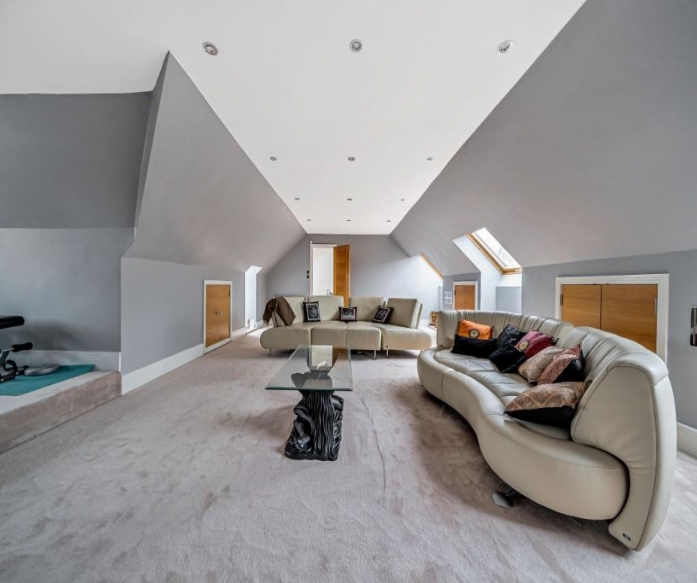
If your home sits within a conservation area, the rules around loft conversions are stricter than they are for most London properties. The permitted development freedoms that apply to standard homes are significantly reduced, and in some cases removed entirely.
This does not mean a loft conversion is impossible. It means you need to understand the rules specific to your area before you commit to any design or spend money on drawings and surveys.
What is a conservation area?
A conservation area is a designated zone where the local planning authority has decided that the character and appearance of the area is worth preserving or enhancing. The designation gives the council additional powers to control changes to buildings and the wider environment within the boundary.
London has more conservation areas than any other part of the country. There are over 1,000 across the capital's 33 boroughs, covering everything from grand Victorian terraces in Kensington to modest Edwardian streets in outer south London. Many homeowners do not realise their property is within one until they start looking into planning rules.
You can check whether your property falls within a conservation area using your local council's planning portal or the Magic Map tool provided by the government, which overlays planning designations across England.
How conservation area status affects permitted development
Under standard national permitted development rules, most rear dormers and Velux conversions can proceed without a planning application. Conservation area designation changes this significantly.
Within a conservation area, any enlargement of a roof that would be visible from a highway requires full planning permission. In practical terms, this means side dormers and often rear dormers that can be seen from a road or public footpath fall outside permitted development.
Velux style roof lights set into the existing slope are sometimes still permitted development within conservation areas, provided they do not project significantly beyond the plane of the roof and are not on a front elevation. But this depends on the specific borough and the local conservation area appraisal, which can impose additional restrictions beyond the national rules.
The key point is that conservation area rules are not uniform across London. Each conservation area has its own character appraisal and management plan, and different boroughs interpret and apply the rules differently. What is acceptable in one area may not be in another even within the same borough.
Our permitted development rules guide explains how the national framework works for standard properties, which provides useful context before looking at the additional conservation area layer.
What planning permission involves in a conservation area
If your proposed conversion requires planning permission, the application is assessed against a broader set of criteria than a standard householder application.
The council will consider whether the design preserves or enhances the character and appearance of the conservation area. This is the central test. It is not enough for the conversion to be structurally sound and code compliant. It also needs to be sympathetic to the architectural character of the area.
In practice this means the materials, proportions, and detailing of the conversion will be closely scrutinised. A zinc clad dormer might be acceptable in some conservation areas and completely refused in others. Traditional materials that match or complement the existing roof covering are generally more likely to gain consent.
The Planning Portal provides guidance on making householder applications and what conservation area considerations typically involve. It is a useful first reference before you engage a planning consultant or architect.
The role of a conservation officer
Every London borough has a conservation officer whose job is to advise on applications affecting conservation areas and listed buildings. Engaging with them before you submit an application can be genuinely useful.
A pre-application enquiry, which is a paid service offered by most councils, gives you the opportunity to present your proposals informally and get officer feedback before you commit to a full application. This can save significant cost if the officer identifies early that a particular design approach is unlikely to gain consent.
Some conservation officers are pragmatic and will work with you to find a design that is acceptable. Others interpret the rules strictly. Knowing where your local officer stands before you invest in detailed drawings is time and money well spent.
Pre-application fees vary by borough but typically run between £150 and £500 for a householder query. Check your local council's planning portal for the specific fee structure in your area.
What designs tend to get approved in conservation areas
While every application is assessed on its own merits, there are design approaches that consistently perform better in conservation area applications than others.
Rear dormers finished in materials that match the existing roof, with proportions that sit quietly within the roofscape rather than dominating it, tend to fare better than bold contemporary additions. Lead or zinc cladding is accepted in some conservation areas but not others. Slate or tile that matches the existing covering is generally the safest material choice.
Keeping the dormer set back from the eaves and the ridge line, rather than running it full width to the very edges of the roof, helps it read as a subordinate addition rather than a dominant new element. Many conservation officers specifically look for this kind of restraint in a design.
Roof lights on rear slopes, where they are not visible from the street, are often the most straightforward option in sensitive conservation areas. A well designed Velux conversion can still create a genuinely useful room in many London lofts, particularly where the existing ridge height is reasonable.
Our Velux vs dormer guide compares both options in terms of cost, space, and value, which is helpful context when you are weighing up which design direction to pursue in a conservation area.
Article 4 directions and their impact
Some London conservation areas go further than standard conservation area restrictions through the use of Article 4 directions. These are local planning directions that specifically remove permitted development rights that would otherwise apply.
In areas covered by an Article 4 direction, works that would normally be permitted development require a planning application. This can include things like changing window materials, altering front boundaries, and in some cases certain types of roof alteration.
Article 4 directions are used extensively in inner London boroughs. Islington, Camden, Hackney, and Southwark all have Article 4 directions covering significant parts of their area. Some of these directions are borough-wide. Others apply to specific streets or estates.
Checking whether an Article 4 direction applies to your property is straightforward on your local council's planning portal and takes only a few minutes. Skipping this check and assuming permitted development applies is one of the most common and costly mistakes homeowners make when planning a loft conversion in London.
Listed buildings within conservation areas
Some properties within conservation areas are also listed buildings. These are subject to an entirely separate and more demanding regime.
If your home is listed, permitted development rights do not apply at all. Any works, including internal alterations, require listed building consent in addition to any planning permission that may be needed. The threshold for what constitutes a notifiable alteration is lower for listed buildings than for unlisted properties.
Listed building consent applications are assessed against the impact on the special architectural or historic interest of the building. Loft conversions on listed buildings are possible but they require careful design, specialist advice, and in many cases a heritage statement that demonstrates understanding of the building's significance.
Unauthorised works to a listed building are a criminal offence. The penalties include unlimited fines and in serious cases prosecution. If you are in any doubt about whether your property is listed, check the Historic England National Heritage List for England before proceeding with any plans.
Structural and building regulations requirements
Getting planning permission in a conservation area does not change what building regulations require. All the same structural, fire safety, insulation, staircase, and electrical standards apply regardless of whether the property is in a conservation area or not.
Our building regulations guide covers these requirements in full. The party wall process also applies in exactly the same way as it would for any other loft conversion in London. Our party wall agreements guide explains what to expect and how to manage the process.
Timelines and costs
A planning application in a conservation area follows the same eight week statutory determination period as a standard householder application. In practice it can take longer, particularly if the officer requests additional information or the application goes to committee rather than being decided under delegated powers.
Budget for the application fees and associated professional costs. A householder application currently costs £258 in England. Architect drawings prepared to planning standard, a planning consultant if required, and any heritage or design and access statements add to this. Total professional costs for a conservation area application typically run between £1,500 and £3,500 depending on the complexity of the proposals and the borough involved.
If the application is refused, you have the right to appeal to the Planning Inspectorate. Appeals take around six months and add further cost. Getting the design right before submission, ideally with pre-application officer engagement, is the most reliable way to avoid this outcome.
For a full picture of the costs involved in a London loft conversion beyond planning, our loft conversion budgeting guide covers everything from structural engineer fees to building control and party wall costs.
The straightforward summary
Living in a conservation area does not prevent you from converting your loft. But it does mean the process requires more care, more professional input, and more time than a standard conversion on an unrestricted property.
Check your conservation area status and any Article 4 directions before you do anything else. Engage a conservation officer early if a planning application is likely. Choose a design that respects the character of the area rather than fighting against it. And if your property is listed, get specialist advice before you proceed with any plans at all.
The homeowners who navigate conservation area rules successfully are the ones who take the time to understand them upfront rather than discovering the constraints halfway through the process.
If you are building your understanding of what a loft conversion involves more broadly, our loft conversion types guide, loft conversion costs page, and permitted development rules guide are useful places to continue.