What Is an L-Shaped Loft Conversion?
June 6, 2025
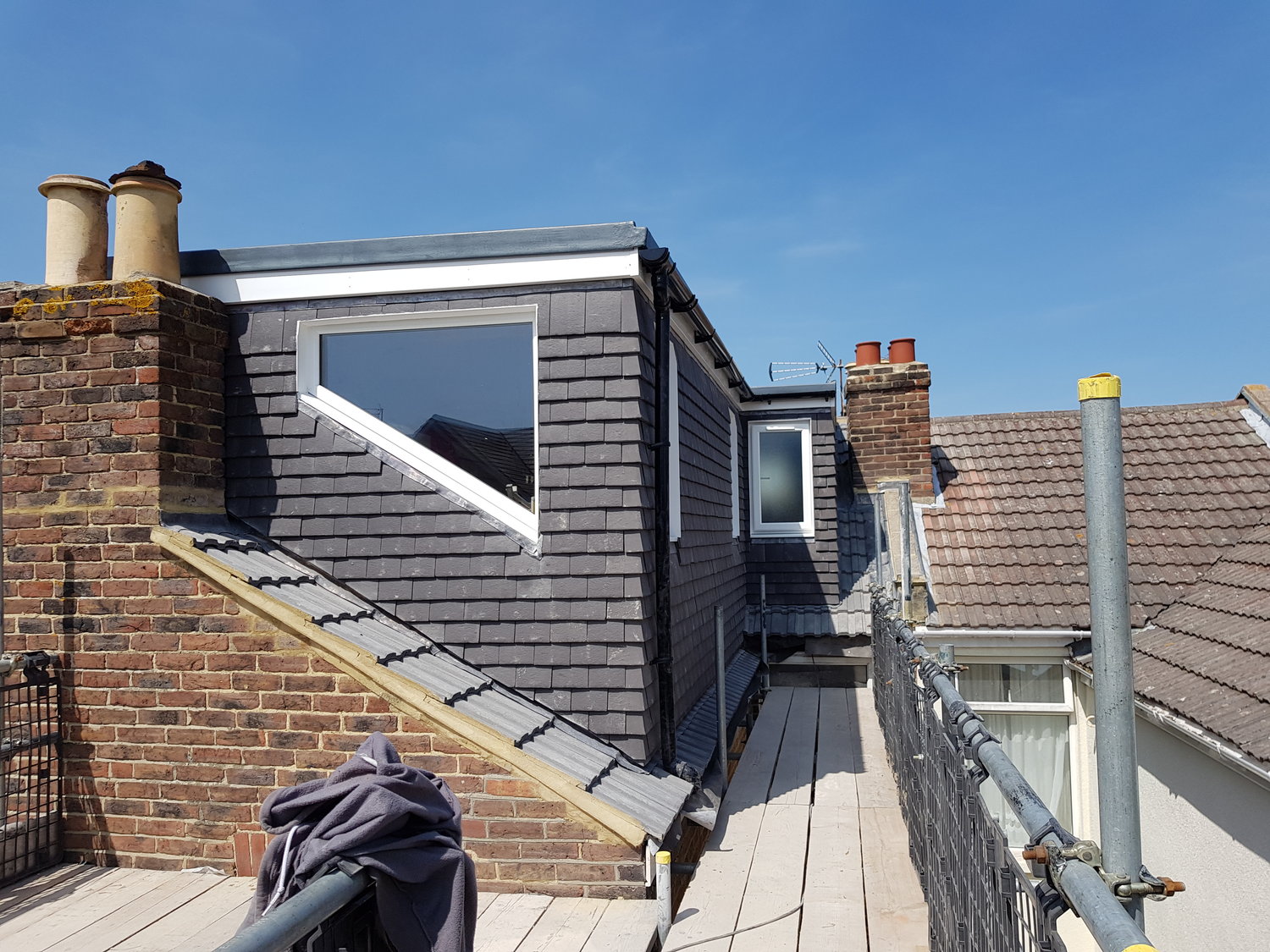
If you live in a Victorian or Edwardian terraced house in London, there is a good chance you have heard the term L-shaped loft conversion. It is one of the most popular conversion types in the capital, and for good reason. But it is also one of the most misunderstood in terms of what it actually involves, what it costs, and which homes it suits.
This guide explains everything clearly so you can decide whether it is the right option for your home.
What an L-shaped loft conversion actually is
An L-shaped loft conversion combines two dormers built at right angles to each other, creating a footprint that forms an L shape when viewed from above. In most cases this means a main rear dormer running across the back of the house combined with a smaller dormer extending over the back addition, which is the lower rear extension that sits behind the main body of many Victorian and Edwardian terraces.
The result is a significantly larger and more versatile loft space than a single rear dormer alone would create. Instead of one rectangular room across the back of the main roof, you get an L-shaped floor plan that opens up genuine possibilities for a master bedroom with ensuite, a bedroom with separate dressing area, or even two separate rooms depending on the size of the property.
The back addition element is what makes this conversion type specific to Victorian and Edwardian terraces. These homes were typically built with a lower rear outrigger, sometimes called a back addition or back return, which originally housed the kitchen, scullery, and outside toilet. The roof of this outrigger sits lower than the main roof and at a right angle to it, which is exactly what creates the opportunity for an L-shaped conversion.
Why it works so well on Victorian and Edwardian terraces
The geometry of the typical Victorian terrace in London is almost perfectly suited to an L-shaped conversion. The back addition creates a natural second dormer position at right angles to the main rear dormer, and the combined floor area of both elements is typically larger than what a single dormer could achieve on the same property.
Many of these homes have a back addition that already extends one storey. The loft conversion brings the upper level of the back addition up to match the main loft space, effectively creating a continuous upper floor across the rear of the property where previously there was a step down.
The L-shape also works well structurally because the two dormers support each other at the junction, which simplifies certain aspects of the structural design compared to some other approaches.
If you are not sure whether your home has a back addition that suits this conversion type, look at the rear of your property from the garden. If there is a lower roofed section at the back that runs at right angles to the main house, you almost certainly have the right configuration for an L-shaped conversion. Our loft suitability guide explains what to look for when assessing whether your home is a good candidate for different conversion types.
How much space does it create?
This is where the L-shaped conversion really justifies its popularity in London.
A single rear dormer on a standard London terrace typically creates between 15 and 25 square metres of usable floor space. An L-shaped conversion on the same property typically creates between 30 and 50 square metres, depending on the size of the main roof and the back addition.
That is a meaningful difference. It is the difference between fitting a single bedroom with limited space to spare and fitting a proper master bedroom with a well proportioned ensuite and potentially a dressing area or study space alongside it.
For many London families who need more than one additional room, an L-shaped conversion can sometimes accommodate two bedrooms and a bathroom within the same loft space, which on a mid terrace represents a genuinely transformative increase in the usable area of the home.
What does an L-shaped loft conversion cost in London?
An L-shaped loft conversion in London typically costs between £45,000 and £70,000 fully finished. The range reflects differences in the size of the property, the specification of the finish, and the complexity of the structural work at the junction between the two dormer elements.
The higher cost compared to a standard rear dormer reflects the additional structure required for the back addition dormer, the more complex roofing work at the internal corner where the two dormers meet, and the greater internal volume that needs insulating, plastering, and finishing.
The internal corner junction, sometimes called the valley, is one of the most technically demanding parts of an L-shaped conversion from a weatherproofing perspective. Getting this detail right is critical because a poorly executed valley junction is a common source of water ingress on loft conversions. An experienced builder who has done this many times will handle it correctly. An inexperienced one may not.
Our loft conversion budgeting guide covers the full cost picture including the additional professional fees, party wall costs, building control, and other expenses that sit alongside the build quote on any London loft conversion.
Planning permission and permitted development
Most L-shaped loft conversions on Victorian and Edwardian terraces in London qualify for permitted development, which means no formal planning application is required. The two dormer elements are treated together as a single conversion for the purposes of the volume calculation, and provided the total volume added does not exceed 40 cubic metres for a terraced home the permitted development rules are satisfied.
As with any loft conversion, conservation area designations, Article 4 directions, and local borough policies can affect whether permitted development applies to your specific property. Inner London boroughs with extensive conservation area coverage, such as Islington, Camden, and Hackney, require particularly careful checking before assuming permitted development is available.
The materials used on the exterior of both dormer elements need to be similar in appearance to the existing house under permitted development rules. In practice this means matching or complementing the existing brick and roof covering rather than introducing a dramatically different external finish.
Our permitted development rules guide explains the full framework and the specific conditions that need to be met, and our conservation area guide covers the additional restrictions that apply in sensitive locations.
Building regulations and structural considerations
Building regulations apply to an L-shaped conversion in exactly the same way as any other type. The floor structure needs to be assessed and strengthened to meet habitable room standards. Fire safety measures including protected escape routes and interlinked smoke alarms are required. The staircase must comply with the specified dimensions. Insulation must meet current thermal performance standards.
The structural complexity of an L-shaped conversion is somewhat greater than a standard rear dormer because of the junction between the two elements. Steel beams are almost always required, both to carry the loads around the dormer openings and to handle the structural requirements at the corner where the two dormers meet.
A structural engineer needs to assess the existing building and produce calculations specific to the L-shaped configuration. This is not a job for a generic residential structural engineer who rarely works on loft conversions. You want someone with direct experience of this conversion type who understands the specific load paths and structural details involved.
Our structural calculations guide explains what the structural engineer assesses and why having the right engineer involved from the start is fundamental to a safe and compliant build. Our building regulations guide covers the full requirements and the inspection process.
The staircase in an L-shaped conversion
The staircase position is worth thinking about carefully on an L-shaped conversion because the larger floor area creates more options but also more decisions.
The staircase needs to arrive in a position that serves the whole L-shaped floor plan efficiently without eating into the most valuable parts of the space. On some properties it works best positioned in the main dormer section. On others, arriving through the back addition element makes more sense depending on the layout of the first floor below.
Getting the staircase position right requires thinking about the floor below as well as the loft itself. Where can the staircase fit on the first floor without destroying a bedroom or creating an awkward dead corridor? Which position on the first floor corresponds to the best arrival point in the loft?
These are design questions that benefit from proper architectural input. An experienced architect or architectural technician who has worked on many Victorian terraces will have seen these challenges before and know how to resolve them. Our do you need an architect guide explains the role of design professionals on a loft conversion and when proper design input pays for itself.
How much value does an L-shaped conversion add?
An L-shaped loft conversion consistently delivers some of the strongest returns of any conversion type in London. The combination of generous floor area, full headroom throughout, and the ability to accommodate a master bedroom and ensuite creates exactly the kind of space that London buyers pay a premium for.
Most agents and surveyors report that a well built L-shaped conversion adds between 20% and 25% to the value of a Victorian or Edwardian terrace in London. On a £700,000 home that is £140,000 to £175,000 in added value.
Even at the upper end of build costs, the return on investment is compelling. And when you compare the total cost of an L-shaped conversion against the cost of moving to a bigger home in London, the conversion almost always wins financially. Our loft conversion vs moving house guide runs through that comparison in detail.
The key to achieving the upper end of that value range is quality of finish and functionality of layout. A well designed L-shaped conversion with a generous master bedroom, a properly proportioned ensuite, and good natural light will add more value than a poorly designed one with the same floor area. Design matters, and it is worth investing in getting it right.
Common mistakes to avoid
There are a few specific mistakes that come up repeatedly on L-shaped conversions that are worth knowing about before you start.
Underestimating the valley junction detail is the most consequential. The internal corner where the two dormers meet requires careful waterproofing and detailing. Cut corners here and water ingress is the result, often not immediately obvious but causing damage over time. Ask your builder specifically about their experience with this detail and how they approach it.
Positioning the staircase without properly thinking through the first floor layout is another common problem. It seems straightforward to find a position on the first floor but getting it wrong means losing a bedroom, creating an awkward landing, or arriving in the wrong part of the loft entirely. Work this out on paper before anything else.
Specifying windows without considering solar gain is worth mentioning specifically for L-shaped conversions because the back addition dormer often faces a different direction to the main rear dormer, and one of them may catch more direct sun than expected. Solar control glazing on south or west facing windows is a modest additional cost that makes a meaningful difference to comfort in summer.
And finally, not getting a party wall notice served early enough. On a mid terrace with neighbours on both sides, an L-shaped conversion will almost certainly trigger party wall obligations on both sides. Leaving this until the last minute delays the project and creates unnecessary stress. Our party wall agreements guide explains the process, the timelines, and what to budget for.
Is an L-shaped conversion right for your home?
The honest answer is that if you live in a Victorian or Edwardian terraced house in London with a back addition, an L-shaped conversion should be near the top of your list to consider. It creates more space than any other conversion type available to these homes, it adds the strongest value, and it suits the geometry of the building naturally.
The questions to resolve before committing are whether the existing roof heights on both the main roof and the back addition are sufficient, whether the first floor layout can accommodate a staircase in a sensible position, and whether your budget stretches to the higher cost compared to a standard rear dormer.
A structural engineer assessment of the existing roof space and a preliminary design exercise to work out the staircase position will answer all three questions before you spend significant money on drawings or builder quotes.
The straightforward summary
An L-shaped loft conversion combines a rear dormer on the main roof with a second dormer over the back addition, creating an L-shaped floor plan that is larger and more versatile than a standard rear dormer alone.
It is the conversion of choice for Victorian and Edwardian terraces in London, delivering the most usable space, the strongest value uplift, and the best return on investment of any conversion type available to these homes. It costs more than a standard dormer and involves more structural complexity, but for the right home the numbers make a compelling case.
At Loft Converter London we have completed many L-shaped conversions across London and understand the specific details that make the difference between a conversion that works brilliantly and one that disappoints. If you are thinking about an L-shaped conversion and want to understand what it would involve for your specific home, we are happy to talk it through from the start.
Our loft conversion costs page, loft conversion types guide, and hip to gable vs dormer guide are useful next steps if you want to keep building your understanding before speaking to anyone.