The types of Loft Conversions that we work in -
Barnes is the kind of place that does not need to announce itself. Tree-lined streets, solid period homes, a village feel that sits surprisingly close to central London. People who live here tend to stay and when more space is needed the answer is usually to improve what you already have rather than give it up. A dormer loft conversion fits that approach well. It extends from the rear roof slope, brings in proper head height and turns a loft that was doing nothing into a room that adds genuine value to the home. Victorian and Edwardian properties are common throughout Barnes and the roof geometry on these homes tends to work well for dormer conversions. The result rarely looks like an addition. It looks like it was always part of the plan. Best for: Victorian and Edwardian homes in Barnes, households that need a quality extra bedroom or a quiet place to work, and lofts where the head height is currently too low to be of any practical use.
A hipped roof is a familiar sight on Barnes semi-detached and end-of-terrace properties. The sides of the roof angle inward rather than finishing flat and while that looks tidy from the pavement it creates a narrower and more restricted loft on the inside. Space that could be useful gets eaten up before the conversion has even started. A hip to gable conversion rebuilds that sloping side as a straight vertical wall. The full usable width of the loft is restored and the whole space becomes significantly more practical. Add a rear dormer to the equation and you have a well-proportioned layout with room for a bedroom and a bathroom that neither feels cramped nor compromised. Best for: Semi-detached and end-of-terrace homes in Barnes where a hipped roof is quietly limiting what the loft can offer and making a conversion feel harder to justify than it should be.
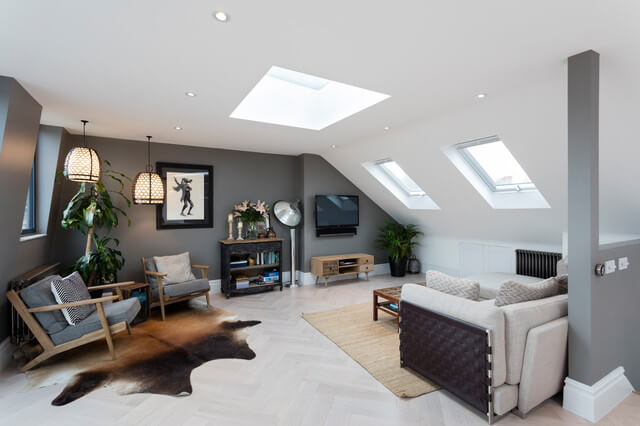
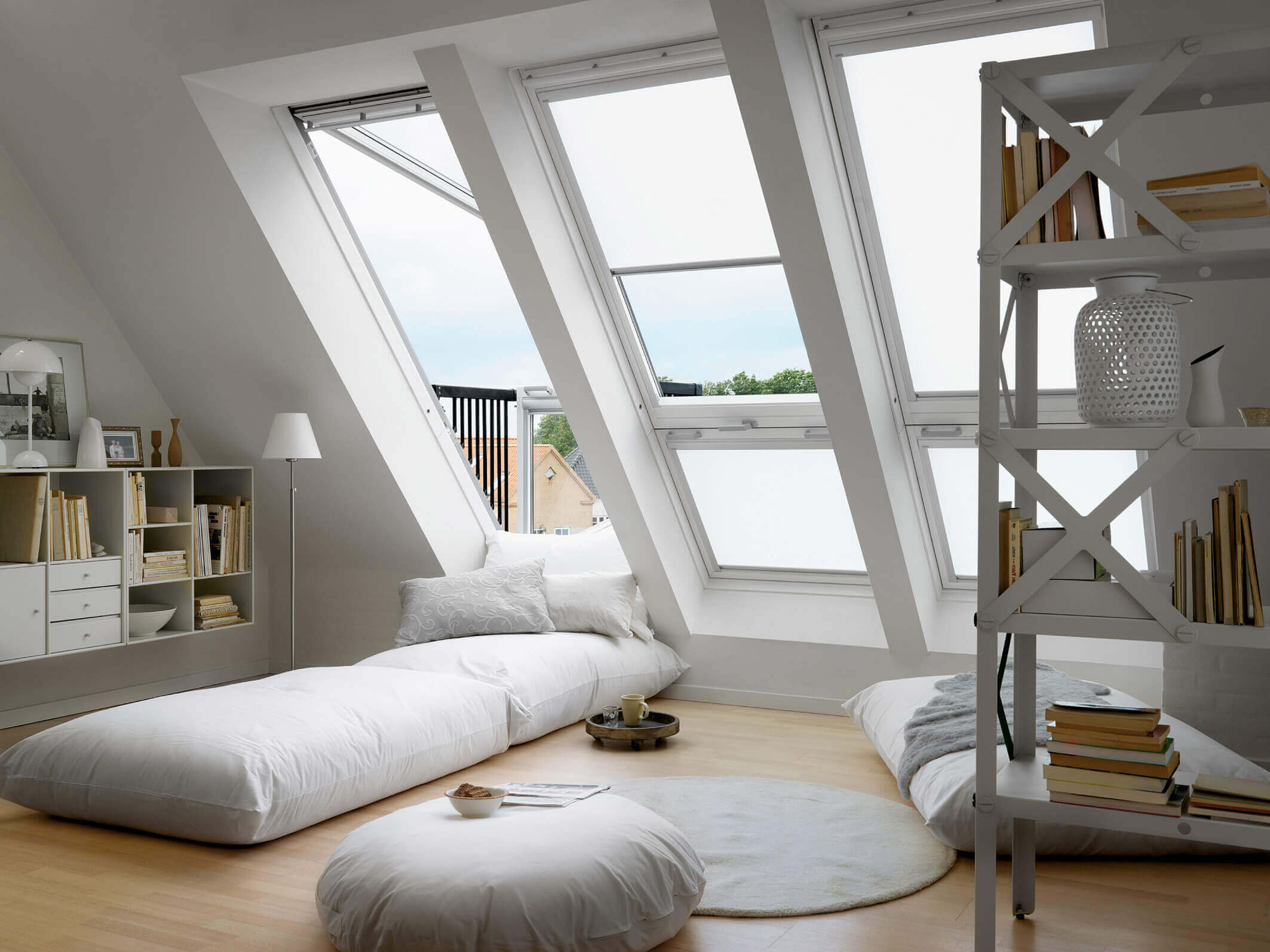
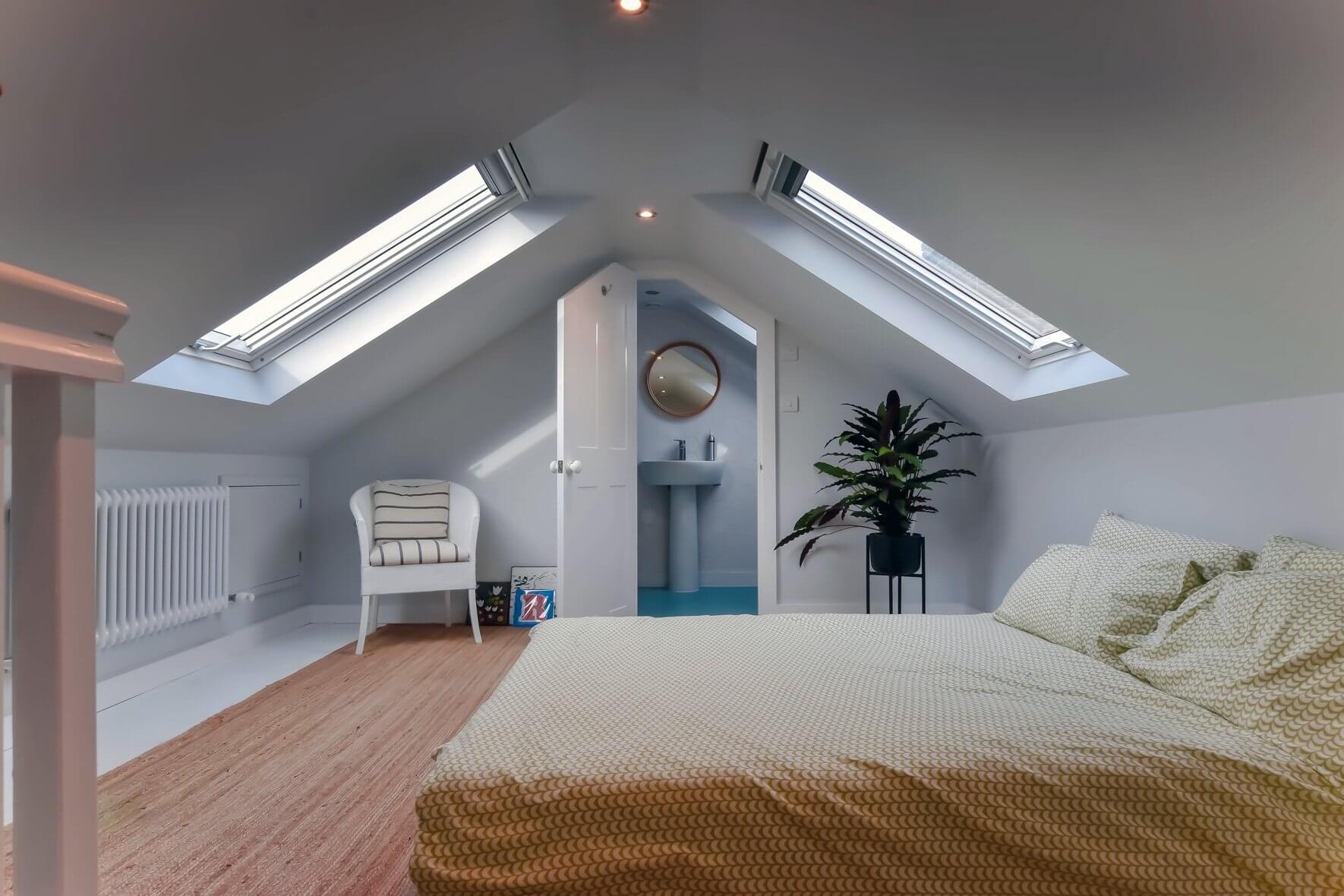
Barnes has a strong sense of how things should look and a Velux conversion respects that instinct completely. Nothing about the roofline changes. Roof windows are fitted with care into the existing structure, the floor is reinforced to meet habitable room requirements, insulation is properly upgraded and the space is brought fully in line with building regulations. The exterior of the house is left exactly as it was. For homes in Barnes where the loft already carries a good amount of head height this is often the most fitting solution. It is unobtrusive, it is well suited to conservation-sensitive streets and it produces a room that is calm, light-filled and comfortable to spend time in. Not every conversion needs to make a statement and in Barnes that is often considered a virtue. Best for: Barnes homes with adequate existing loft height, properties on streets where external alterations need to be kept to a minimum, and homeowners who want a well-finished room with as little disruption as possible.
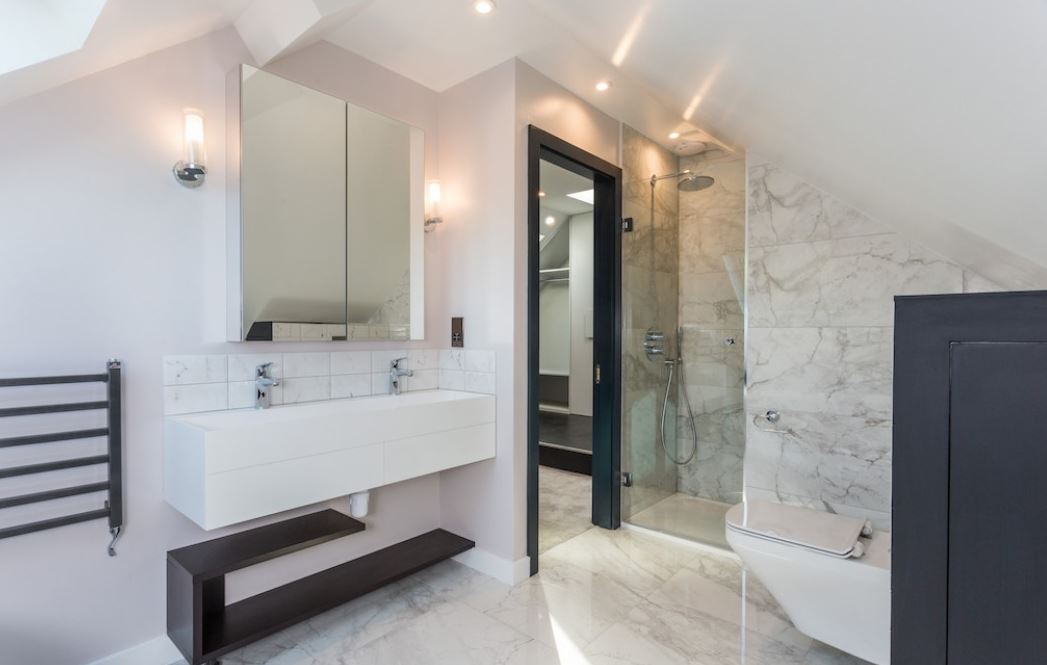
For Barnes homes that include a rear extension an L-shaped dormer conversion opens up a level of space that a standard single dormer simply cannot match. One dormer runs across the main rear roof and a second sits above the existing rear extension. The two connect into a continuous L-shaped structure and the floor area that results is considerably more generous than most people anticipate before they see it. Two bedrooms and a bathroom fit comfortably within this layout. So does a large principal bedroom with an en suite and properly considered storage. The proportions tend to feel easy rather than engineered and that makes a real difference when the space becomes part of daily life. It is one of the more rewarding conversions to live with once it is done. Best for: Barnes properties with an existing rear extension, households who need more than one room from the conversion, and homeowners who want a loft that feels spacious and natural rather than maximised to its limit.
A mansard conversion is not the simplest route and it is not intended to be. The rear roof slope is completely rebuilt at a near vertical angle and finished with a flat roof on top. What results on the inside is a full height floor of the house. Not a room tucked into the roofline but a proper space with genuine ceiling height, good natural light and the kind of proportions that make it easy to forget you are in what used to be a loft. Barnes is a neighbourhood where homes are looked after and where considered improvements to a property are understood and valued. A well-built mansard conversion belongs in that context. Full planning permission is required and the process is more involved than other conversion types. That is simply the nature of the work. For homeowners who approach it with the right expectations the outcome is the best a loft conversion can offer. Best for: Larger Barnes properties, homeowners for whom the quality and extent of the space matters above all else, and projects where the full transformation of the roof is seen as a long-term investment in one of London's most quietly desirable addresses.
There are bungalows in Barnes that carry more potential in their rooflines than most people ever stop to consider. The roof on a bungalow covers the entire footprint of the property and that tends to mean the loft is wider and more generous than the building suggests from the outside. Converting it properly adds a whole new level to the home. Bedrooms, a bathroom, a private space for whatever the household needs most. And the ground floor does not have to give up a thing. Barnes bungalow owners tend to be thoughtful about their homes and a loft conversion suits that approach well. It is a project that adds without taking away. The house gains a new floor and the way the household uses it quietly shifts in response. That is not a small outcome for a home that was already well-loved. Best for: Single-storey homes in Barnes where the ground floor layout is working well and an upper floor would complete the property, and homeowners who want to add meaningful long-term space in a way that feels right for the house and the neighbourhood.
Do you have a question about Loft Conversions? We're here to help. Contact our team at Loft Converter London
The minimum height required for a Loft Conversion is 2.2m (from the floor to the highest point in your loft). If you do not have the required height, your ceilings can be lowered on your first floor.
This depends on the size and type of Loft, most loft conversions take around 10-12 weeks. We can give you a more accurate estimation when we see your property.
Loft Conversion cost is determined by the size and type of the project, the features you would like, etc. Our architect will help you achieve the best use of your space within your budget. Most Lofts cost between £30,000 and £70,000.
No - it's safe to carry on living in your house. Our team starts from the scaffolding before the stairs go in. We always try to limit the disruption during the construction process.
Loft Conversions usually fall under the permitted development category therefore planning permission is not normally required. There are some exceptions like conservation areas, flats, or listed buildings. Our in-house surveyors can advise further on planning permission..
A party wall agreement is also known as PWA is required if you own semi-detached or terraced property. In simple words, if you are working within or near your neighbor’s boundary then you will need a party wall agreement in place. Click here for more info.
Yes - it will add from 15% to 25% upwards depending on the size, design, and type of Loft. Read more about adding value here.
Yes, all Loft conversions require building regulation approval from the local authority. These regulations are important to ensure the safety measures are in place and they set a protocol of construction and design to follow.
Absolutely yes, we will work with you to achieve your dream new living space.